Free Handouts
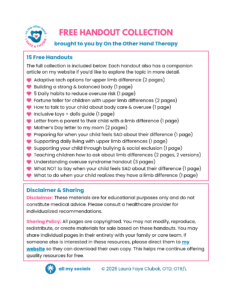
These free handouts offer practical guidance for families raising children with upper limb differences, including support for physical health, emotions, social situations, and everyday life.
Simple, family-friendly habits that help protect growing bodies. These five daily practices support balance, strength, and rest for children with upper limb differences — and work well for the whole family
An age-appropriate guide to introducing upper limb difference body care and overuse syndrome awareness with your child, without fear, pressure, or singling them out. Designed to support whole-family conversations about strong, sustainable bodies.
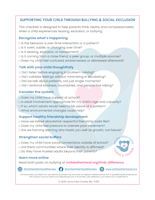
Bullying does not always look like name-calling or obvious cruelty. For children with limb differences, social harm often exists on a spectrum from subtle exclusion to hurtful “joking,” sometimes coming from close friends. This post explores bullying as a systems issue and explains why adult support matters.
Limb different toys are fabulous for all children for so many reasons! There now are so many incredible options available at the click of a button

People with one-sided upper limb differences (ULD) experience increased risk of developing overuse syndrome over their lifetimes due to strain on the dominant side. Learn all about overuse syndrome and what parents and practitioners can do to help

I wrote this letter to express empathy for all my mother went through raising a child with a hand difference — and to thank her for all the support and love she gave me over the years.

Overhearing a parent talking to their child with a limb difference inspired me to think about what I would have liked to have heard as a child. Here it is in letter format.

Children with upper limb differences often learn from people with two hands—and that means adapting every new activity. It’s easy to miss how hard their bodies are working. Let’s help them become body sleuths and learn to tune into their own needs.
We delve into the factors that affect typing and accessing a computer for children and young adults with hand/arm differences, including strain to the “dominant” hand as well as incorporating the “affected” hand or arm. While ergonomics is important for everyone who types, it is even more important for children with hand/arm differences