Start Here: Parenting Series Landing Page
Raising a child with an upper limb difference: 13 things every parent should know
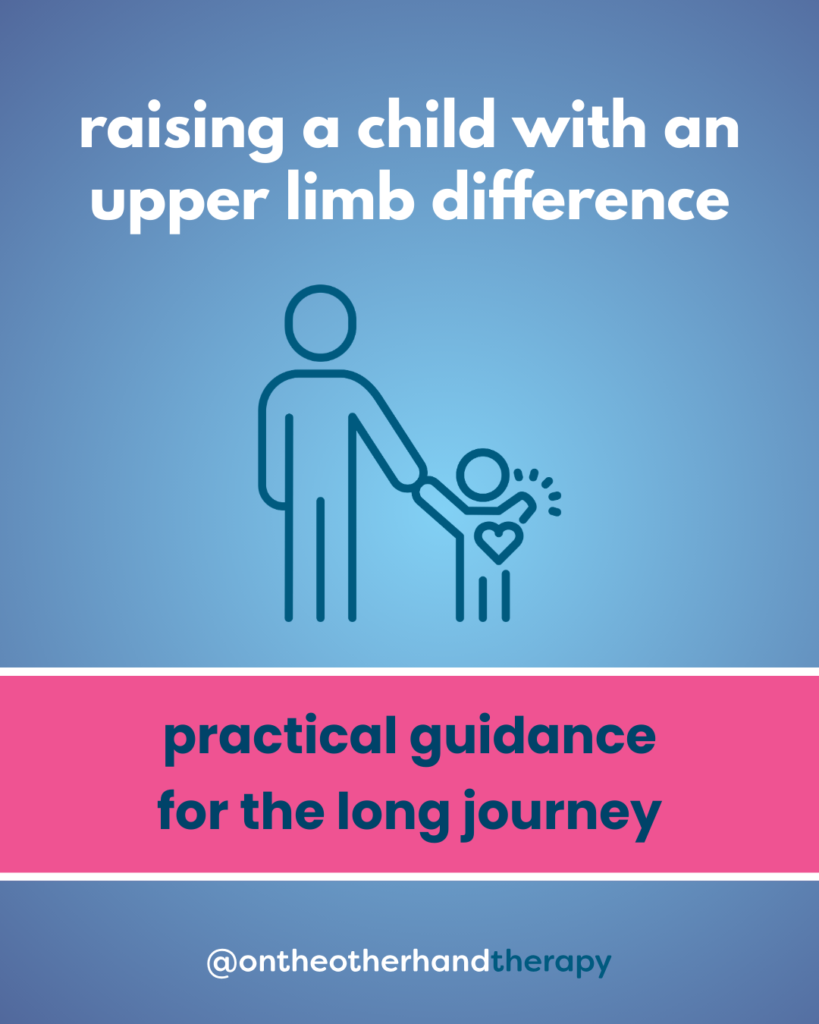
Raising a child with an upper limb difference brings joy, questions, and moments that few people prepare parents for.
Over time, families learn to navigate medical appointments, school conversations, social situations, and decisions about therapy or prosthetics. Along the way, parents also carry emotional work that is not always visible to others.
This parenting series offers practical and compassionate guidance for families raising children with upper limb differences.
The ideas shared here come from lived experience growing up with a hand difference, decades of work as a pediatric occupational therapist, and long involvement in the limb difference community.
The goal is not to provide a checklist or a perfect formula for parenting. Every child and every family is different.
Instead, these posts offer thoughtful suggestions that can help parents support their child’s physical development, emotional well being, and long term resilience.
You may find that some ideas resonate right away. Others may become more helpful later as your child grows.
Take what fits your family and leave the rest.
Parenting tips
This series will grow over time as new topics are added.
Tip #1: take care of yourself
Raising a child with an upper limb difference is a long journey that requires energy, patience, and support. This first post focuses on sustainable parenting and why caring for yourself is an important part of caring for your child.
Read Tip #1: Take Care of Yourself First (Yes, Really You)
A note for parents
Many parents feel pressure to do everything perfectly. In reality, parenting a child with a physical difference is a long learning process.
You do not have to figure everything out at once.
This series is meant to support families as they grow alongside their children.
Explore more resources
Access the Free Handouts
Explore Typing/Keyboarding with an Upper Limb Difference (or two!)
Find out about Limb different toys & dolls
Learn “How to think like an OT”
© 2026. Laura Faye Clubok, MS, OTR/L, On The Other Hand Therapy. All rights reserved.