
5 Habits to Reduce Overuse Risk for Children with Upper Limb Differences
Simple, family-friendly ways to protect growing bodies
Menu
Prevention begins with small steps
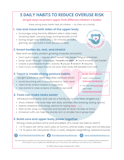
1. Use and move both sides of the upper body
2. Smart bodies rest and stretch
3. Teach and model strong posture habits
4. Tools make tasks easier
5. Build core and upper body strength together
A note about consistency
Free resource
Learn more
Prevention begins with small steps
If you’re raising a child with an upper limb difference, you’ve likely already noticed how creative, determined, and capable they are. Children are remarkable problem-solvers. They figure out how to do what they want to do, often in ways adults would never think of.
That adaptability is a strength. But it can also mean that their bodies work harder in subtle, cumulative ways.
Children with upper limb differences often rely more heavily on one side of their body or use compensatory movement patterns that place extra strain on muscles, joints, and connective tissue. Over time, this can contribute to fatigue, discomfort, or overuse injuries. The good news is that overuse risk isn’t about doing less, it’s about building habits that support balance, recovery, and long-term strength.
These five daily habits are simple, realistic actions you can start using right away. They’re designed to fit into everyday life and work best when practiced as a family so that your child doesn’t feel singled out. The goal isn’t perfection. It’s consistency, awareness, and helping your child’s body stay strong and sustainable as they grow.
1. Use and move both sides of the upper body
Encourage your child to involve their limb-different side in daily tasks whenever possible. This might include brushing teeth, carrying lightweight items, stabilizing objects, or helping turn faucets on and off.
If your child is engaged in one-sided activities such as screen time, crafting, or sports, build in regular pauses. After about 30 minutes, take a short break to stretch, change positions, or switch activities. These small resets can help reduce fatigue and support balanced muscle use.
2. Smart bodies rest and stretch
Rest and recovery protect growing muscles and joints.
Instead of waiting for pain or soreness, normalize short breaks as part of daily routines. Replace “push through” messages with language that values listening to the body, such as “do, rest, and stretch.”
Create a predictable rhythm: activity, pause, stretch, then return to play. Even if your child says they don’t feel sore, their body still benefits from rest and recovery.
3. Teach and model strong posture habits
Posture matters, especially during sitting, screen use, and homework.
Encourage upright positioning and minimize prolonged slouching, rounded backs, or “tech neck.” Use book stands, screen risers, or pillows to bring work to eye level rather than bending the body down to the task.
Family stretch breaks or short yoga moments can reinforce the idea that posture and movement care are normal parts of daily life.
4. Tools make tasks easier
Introduce adaptive tools early and use them as a family so no one feels singled out.
Show children how tools can make everyday tasks easier and more efficient. Start with small, practical changes at home, such as replacing round door knobs or faucets with lever handles. These changes benefit everyone and reduce strain on hands and wrists.
Universal cuffs and similar tools can help a shorter arm or smaller hand grasp objects more easily, supporting participation without extra effort.
5. Build core and upper body strength together
A strong core helps protect the arms and shoulders, and it’s never too early or too late to start.
- For children under 8-10 years, focus on playful strength-building: climbing, swimming, tummy play, animal walks, and rough-and-tumble movement.
- For children over 8-10 years, add simple strengthening such as planks (wall or floor) and using resistance bands. When appropriate add adapted weightlifting under guidance.
Strong bodies are more resilient, and strength-building works best when it feels empowering rather than corrective.
A note about consistency
Overuse prevention isn’t about doing everything perfectly. It’s about building awareness and routines that support your child’s body over time. Think of these habits the way you think about brushing teeth: small daily actions that protect long-term health.
If you’d like a quick reference to keep on your refrigerator or share with teachers, coaches, or therapists, download the free printable handout below.
Free resource: 👇Download the free “5 Daily Habits to Reduce Overuse Risk” handout
Learn more
For more education on overuse prevention, adaptive tools, and supporting strong, balanced bodies, follow on Instagram and subscribe to our newsletter. To access more overuse syndrome information, visit the overuse syndrome hub.
© 2026. Laura Faye Clubok, MS, OTR/L, On The Other Hand Therapy. All rights reserved.