Tip #2: Find Your People — Support for Families Raising a Child with an Upper Limb Difference
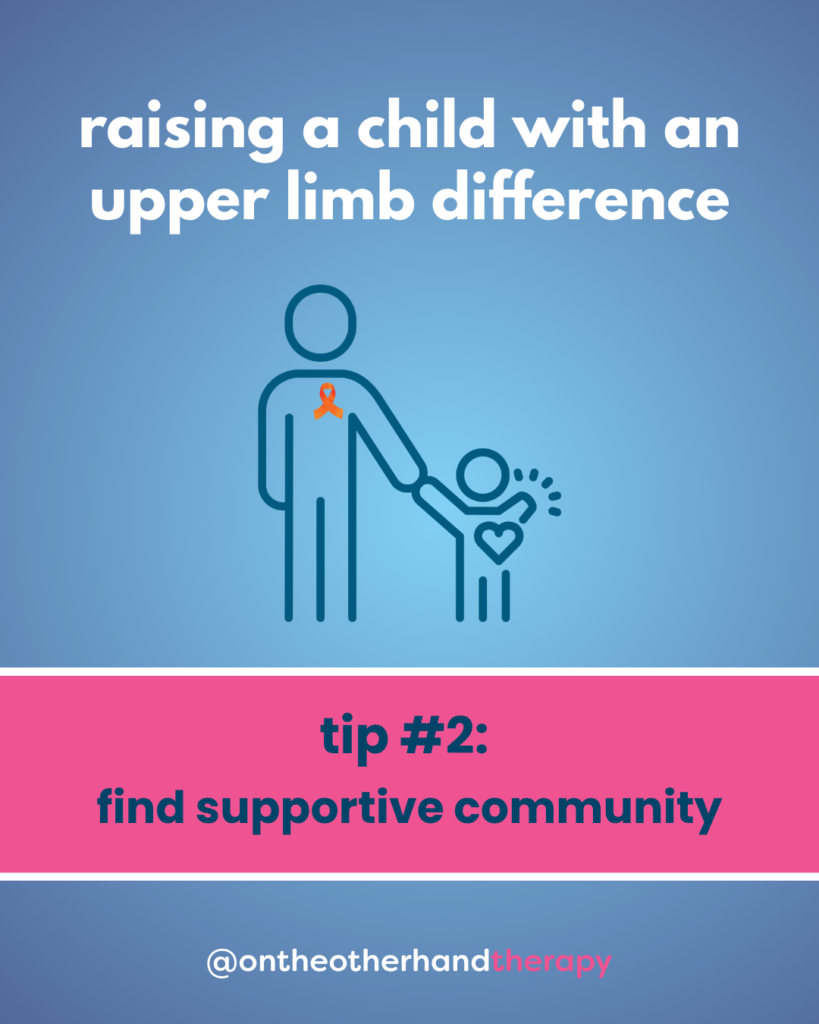
Find your people
Support for the whole family
What counts as community?
When support feels complicated
Not every group is the right fit
It’s okay to take breaks
Connection can take time
Final thought
Want more support?
Find your people
When your child is born with a limb difference or acquires one later in life, it can feel like your world has shifted.
In many ways, it has. But you don’t have to figure it all out alone.
One of the most helpful things families share is the moment they connected with others who truly understood their experience. Maybe it was another parent, a mentor, a teen with a similar limb difference, or even a child who looked like their own.
Community can give hope and perspective. It can remind us that we are not alone, and that our experiences are real, shared, and survivable.
Support for the whole family
Supportive community can benefit more than the child with a limb difference. It can help parents, siblings, and even extended family feel less alone. It can give everyone a sense of belonging and a place to ask honest questions without judgment.
What counts as community?
- Online support groups like Facebook groups or forums
- In-person events or camps like Camp No Limits
- Family weekends like those hosted by Lucky Fin Project
- Social media, curated wisely, can offer connection and representation
You don’t have to attend every event or post online. But if you want support, it’s out there.
👉 Search the Resource Directory for organizations, camps, family weekends, and more!
When support feels complicated
Support can come from many places, including extended family, long-time friends, and new connections within the limb difference community.
Some families report feeling surprised that strangers in limb difference groups offer more understanding than family members or long-time friends. It may seem disappointing that people whom you previously thought were closest to you don’t share your perspective on your child’s limb difference or have different understandings of limb difference. Some may underestimate your child’s abilities, while others may respond with overprotection or uncertainty.
This can be difficult, especially when these perspectives come from relationships you cherished.
It’s okay to be thoughtful about the people and messages that influence your child and who you turn to for support.
Some families find it helpful to:
- limit certain conversations
- set gentle but clear boundaries
- seek out communities that better understand their child’s experience
- take breaks from relationships that feel draining
Not every group is the right fit
Some limb difference events are large and busy, while others are small and intimate. Some groups focus on advocacy, while others center social connections. Try what works for your family, and give yourself permission to leave what doesn’t.
It’s okay to take breaks
While connecting with others can be healing, it can also bring up deep feelings. You might feel tender after an event or overwhelmed by certain stories. This is all normal. You get to engage in ways that feel nourishing, not draining.
Connection can take time
Sometimes families attend an event or join a group expecting instant friendships. While that does happen for some people, it’s not the only way connection develops.
Many meaningful relationships grow slowly, through repeated events, small conversations, or simply recognizing familiar faces over time.
If you attend an event and don’t immediately feel a sense of belonging, that doesn’t mean the community isn’t there for you. Like any relationship, finding your people can take time.
It’s okay to explore at your own pace and allow those connections to develop naturally.
Final thought
Support doesn’t have to come from everyone. It can come from the people who are able to show up in ways that are helpful and respectful. Over time, many families build a circle of support that feels aligned with how they see their child and their future.
Finding supportive community doesn’t solve everything. But it can mean having people to turn to on the hard days and celebrate with on the good days.
Want more support?
👉 Follow the rest of the Raising a Child with an Upper Limb Difference parenting series on Instagram and read the full series here
👉 Access the Resource Directory
👉 Delve into Upper body strengthening tools for upper limb difference
👉 Explore Bullying Part 1: Understanding Exclusion and Social Systems
👉 Read Understanding Limb Difference Language & Terminology
© 2026. Laura Faye Clubok, MS, OTR/L, On The Other Hand Therapy. All rights reserved.