
Driving With an Upper Limb Difference: What Families and Teens Need to Know
Before your teen starts driving
Here are some important things to keep in mind:
- Just because your teen has an upper limb difference or limb loss doesn’t mean they need adaptive equipment. Some people drive without adaptations, while others find equipment or other strategies helpful.
- Your teen should have a voice in the process. Safety and function are important. So are comfort, convenience, confidence, and how your teen feels about using a particular device.
- Pay attention to what happens during early practice. Parent-supervised driving can give you useful information about what your teen can do, where they may have difficulty, and whether fatigue or awkward movement patterns show up.
- A recommendation is worth investigating. If a driving instructor, school, or other professional says your teen needs a particular adaptation, find out why. Is it required by the licensing agency? Is the instructor recommending it based on an observation? Or are they simply unfamiliar with your teen’s abilities?
- Consider an evaluation before buying equipment or making licensing decisions. A qualified driver rehabilitation professional can help determine what your teen actually needs and how different equipment may assist them.
- Think beyond the first road test. Adaptive equipment, license restrictions, vehicle changes, moving to another state, renting a car, college, fatigue, and long-term comfort also can be important factors.
Want to know know more?
For many families raising teens with an upper limb difference or limb loss, learning to drive can bring both excitement and anxiety. Driving represents independence, adulthood, and freedom, but the process can become confusing when disability enters the picture.
There is no single, standardized experience for learning to drive with an upper limb difference or limb loss. Driving instructors, adaptive driving programs, and Bureau of Motor Vehicles (BMV) staff may approach disability differently, sometimes even within the same state.
This post is designed to help families recognize the difference between a recommendation and a requirement. It also can be helpful to know what questions to ask before making decisions that could affect a teen’s driving experience or future licensing options.
Upper limb differences and driving: the big picture
Include your teen in the decision-making process
Start with the permit and supervised practice
The vehicle matters
Finding a driving school and instructor
Know that disability rights may apply
Adaptive driving equipment: helpful tool when it’s actually needed
Adaptive equipment and license restrictions
When should you consider a driving evaluation?
Thinking beyond whether an adaptive device works
State laws vary — sometimes significantly
Frequently asked questions
Where to find more information
Have you been through this process?
Explore more resources
Upper limb differences and driving: the big picture
Upper limb differences and limb loss vary widely. A driver may have a unilateral or bilateral limb difference, a difference involving the hand, forearm, or upper arm, or may use a prosthesis. The strategies and equipment that work for one driver may not be appropriate for another.
The important question is not simply what type of limb difference someone has, but how that person’s abilities, strategies, equipment, and vehicle interact. These factors include:
- Which limb is affected (right, left, bilateral)
- Level of limb difference/limb loss
- Range of motion, strength, and endurance
- Compensation patterns already in use
- The type of vehicle
- Whether adaptive equipment is used
Include your teen in the decision-making process
Your teen should have a meaningful role in decisions about how they learn to drive and whether they use adaptive equipment.
Ask your teen what feels comfortable, what they notice in their body while driving, and what they think about the various options. If someone recommends an adaptation, give your teen opportunities to understand and practice with it before making decisions about equipment or licensing.
A device may be functionally helpful but also still raise questions for a teenager about appearance, attention from peers, convenience, or whether they want to use it every time they drive. These concerns deserve to be part of the conversation.
The driver’s experience of using the equipment is as important as safety concerns. The goal is to find a driving approach that is safe, functional, comfortable, and acceptable to the person who will actually be behind the wheel.
Start with the permit and supervised practice
For many teens, the first driving experiences happen with a parent or other supervising adult before formal driving instruction begins. This can be an important opportunity to observe what your teen can do without adaptive equipment.
Pay attention to their abilities to:
- Steer
- Turn
- Signal
- Start and stop
- Park
- Manipulate other vehicle controls
Concerns about safety, comfort, fatigue, or the amount of compensation required may be good reasons to seek a professional driving evaluation rather than simply adding equipment.
Early practice can provide useful information. It does not have to be a commitment to a particular driving strategy.
The vehicle matters
A driving strategy that works in one vehicle may not work in another. Consider whether your teen will learn in the family vehicle, a driving school’s vehicle, or a vehicle they may eventually own. A strategy that works in a driving school’s vehicle may not transfer directly to the family car or a future vehicle.
Features worth considering include transmission type, turn-signal placement, start/stop systems, parking brake, seat and mirror adjustments, seat belt operation, steering wheel design, the location of other controls, and backup camera and safety features.
Finding a driving school and instructor
Families sometimes expect the most difficult part of learning to drive to be the licensing test. In reality, dealing with a driving instructor or school that is unfamiliar with upper limb differences may have a bigger impact on your teen’s experience than the licensing test itself.
Your teen should be treated as the driver, not as a problem to be solved. An instructor should not assume what your teen can or cannot do.
Look for an instructor who is willing to:
- Ask your teen how they already do things before suggesting a different approach
- Give them an opportunity to demonstrate their abilities
- Talk directly with your teen rather than directing every question to the parent
- Focus on learning to drive rather than repeatedly drawing attention to the limb difference
- Be willing to adapt instruction when needed without making the teen feel singled out
- Recognize that there may be more than one safe way to operate the vehicle
Your teen should also feel comfortable speaking up if something is uncomfortable, confusing, or not working. A good driving instructor should be part of the learning process, not another barrier your teen has to navigate.
If an instructor seems unwilling to learn about your teen’s abilities, repeatedly assumes they cannot perform a task, or makes your teen uncomfortable about their limb difference, it may be worth looking for a different instructor or school.
Know that disability rights may apply
Private driving schools are generally subject to the Americans with Disabilities Act (ADA), although exactly what a school must provide depends on the circumstances. The ADA prohibits discrimination on the basis of disability and may require reasonable modifications or auxiliary aids and services when necessary, subject to applicable limitations. (See U.S. vs. Wold Driving School)
If a driving school tells you that your teen cannot participate, must use a particular adaptation, or must pay additional costs because of their disability, ask the school to explain the basis for that requirement. You may also want to contact an appropriate disability-rights organization or legal resource for guidance specific to your situation and state.
Adaptive driving equipment: helpful tool when it’s actually needed
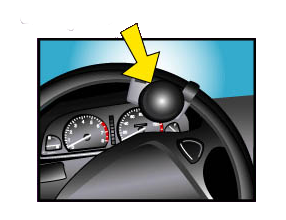
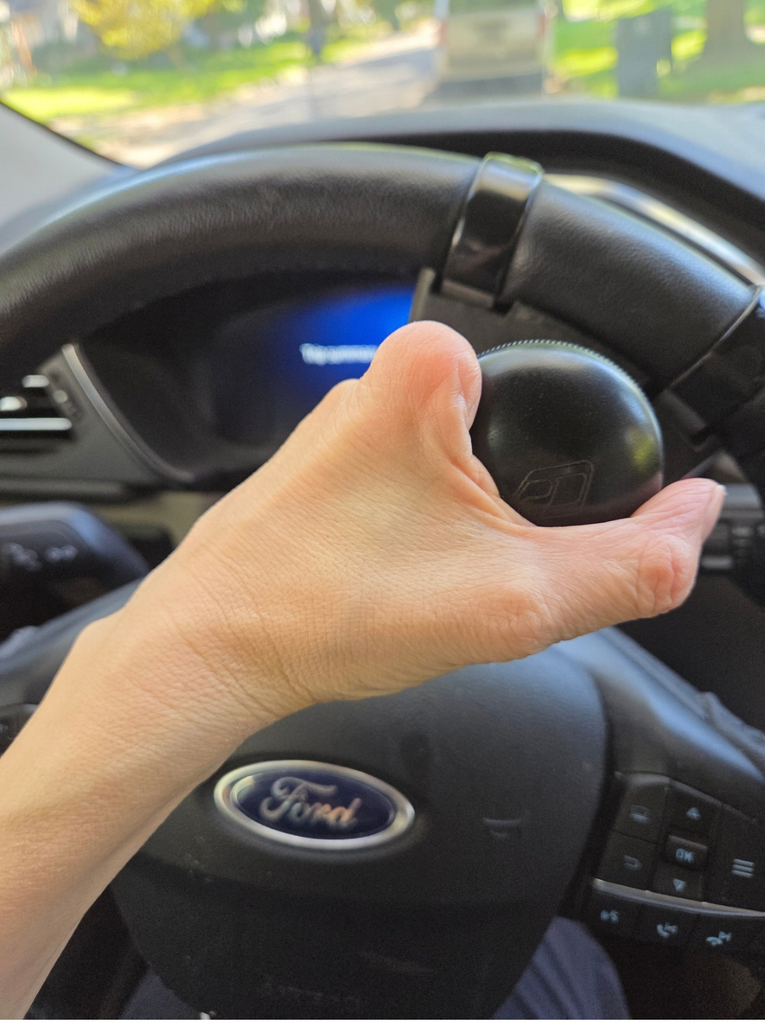
Adaptive equipment, such as steering knobs or modified controls, can be very useful useful, protective, and sometimes essential for a driver. However, adaptive devices should be introduced intentionally rather than automatically. The question is what this particular driver needs to operate this particular vehicle safely and effectively. The goal is to make informed choices that support safety, comfort, and long-term independence.
A recommendation for adaptive equipment should be based on the driver’s abilities and needs, not simply on the presence of a limb difference.
If a driving school tells you that your teen must use a particular device or work with a specialized instructor, ask:
- What requirement or assessment are they basing that recommendation on?
- Has the teen been observed driving without it?
- Is the equipment required by state licensing rules, or is it a recommendation from the instructor or driving school?
- Is a specialized driver rehabilitation evaluation recommended?
- Could using the equipment during the licensing process result in a restriction?
- If so, what exactly would that restriction require?
Families do not have to accept the first recommendation they’re given, even from a driving instructor. Some recommendations are well-founded. The goal is to understand the reason.
Adaptive equipment and license restrictions
In particular, steering knobs can be very helpful for some drivers, but they are not necessary for every person with an upper limb difference.
One important consideration is what happens when adaptive equipment is used during the licensing process. Depending on the state and the circumstances of the evaluation, equipment used during a driving test may be reflected as a restriction on the driver’s license.
Important questions to ask before using adaptive equipment during a driving test:
- If my teen uses this device during the road test, will it be documented as a license restriction? If so, what exactly will the restriction say?
- Would my teen be permitted to drive a vehicle without an adaptive device?
- What would be required to remove or change the restriction in the future?
- Who makes that determination?
A family should understand the licensing implications before introducing equipment specifically for the purpose of passing the road test.
Before scheduling a driving test, families should consider contacting someone knowledgeable at their local BMV or Department of Motor Vehicles (DMV), ideally someone who works with medical reviews or adaptive driving cases.
Having these conversations ahead of time can prevent surprises and give families more control over the decision-making process.
When should you consider a driving evaluation?
A driving evaluation can be helpful when there are questions about whether adaptive equipment is needed, which equipment would be appropriate, or how a driver’s physical abilities interact with a particular vehicle.
A driver rehabilitation specialist can provide a more comprehensive assessment when there are questions about whether adaptive equipment is needed. The National Highway Traffic Safety Administration (NHTSA) notes that these specialists evaluate factors such as strength, range of motion, coordination, reaction time, judgment, and the ability to drive with adaptive equipment. They also can make recommendations about equipment and restrictions.
For a comprehensive driving evaluation, families may want to look for a Certified Driver Rehabilitation Specialist (CDRS®) or another appropriately qualified professional with experience evaluating drivers with upper limb differences. The Association for Driver Rehabilitation Specialists (ADED) also offers a Driver Rehabilitation Professional (DRP) microcredential for providers of basic and low-tech driver rehabilitation services.
A comprehensive evaluation may include clinical and on-road assessment of strength, range of motion, coordination, reaction time, vision, judgment, vehicle controls, and the ability to operate the vehicle safely with or without adaptive equipment.
When contacting a program, ask:
- What credentials does the evaluator hold?
- What does the evaluation include?
- Will the evaluation be conducted in the vehicle my teen will actually drive?
- Is a physician referral required?
- Does insurance cover any portion of the evaluation?
- What is the expected wait time?
Thinking beyond whether an adaptive device works
A driving strategy can be functional and still become uncomfortable or fatiguing over time.
Families and teens should pay attention to shoulder, neck, arm, or trunk discomfort; fatigue during longer periods of driving; and whether a particular hand position requires sustained effort or awkward positioning.
These factors can be especially important when a teen is considering equipment they may use for years. A driver rehabilitation evaluation can help identify whether a particular adaptation supports efficient, sustainable vehicle operation rather than simply making the task possible.
State laws vary — sometimes significantly
Driving regulations related to adaptive equipment are state-specific. Some states have medical review processes or require additional documentation when a driver has a disability. Requirements can also differ depending on how equipment is used during the licensing process. Check your state’s official licensing agency for current requirements.
Historically, steering knobs were often restricted to drivers with documented disabilities. Today, in some states, any driver may legally use a spinner knob, regardless of disability status. However, some states still have specific requirements, and others allow them broadly but attach conditions when they’re used during a licensing exam. A restriction may mean that the driver is required to use that equipment when driving. The process for changing or removing a restriction also varies by state.
This is one reason families should find out what their state’s rules are before deciding what equipment to use during a road test.
Some states have medical review processes or require additional documentation when a driver has a medical condition or disability. Requirements vary, so families should ask their state licensing agency what documentation, if any, will be required.
This is why it’s so important not to rely solely on what one instructor, therapist, or examiner says, but to look up the laws in your state.
Keep copies of relevant evaluations, recommendations, license documentation, and equipment information. Your teen may eventually move for college, purchase a different vehicle, or rent a car while traveling, and licensing requirements or equipment needs may change.
Frequently asked questions
Do you have to use a steering knob if you have an upper limb difference or limb loss?
No. Some drivers with upper limb differences use steering knobs, while others drive safely without them. Whether a steering knob is required, recommended, or results in a license restriction depends on the driver’s needs and the rules and procedures in their state.
What steering knobs do you recommend?
There are many different steering knob designs, and the best choice depends on the person’s vehicle, steering method, hand function, ease of use, installation, and other factors. I don’t recommend choosing a device based solely on an online product description.
When there is uncertainty about whether a steering device is needed or which type would be appropriate, a driver rehabilitation specialist can help evaluate the driver’s needs and recommend appropriate equipment
If I have a steering knob license restriction, can I install one in a rental car?
Rental-car policies regarding adaptive equipment can vary. Before traveling, it’s important to contact the rental company directly and ask whether they permit customer-installed equipment, whether they offer adaptive equipment, and whether there are vehicle-specific requirements. Never assume that a device can be safely or appropriately installed on every steering wheel.
Where to find more information
Association for Driver Rehabilitation Specialists (ADED)
Find information about driver rehabilitation and search for providers, including CDRS® professionals. ADED identifies CDRS® as its highest credential for the field.
National Mobility Equipment Dealers Association (NMEDA)
NMEDA provides consumer resources, equipment information, and a locator for accredited mobility equipment dealers.
National Highway Traffic Safety Administration: Adapted Vehicles
The NHTSA website covers adaptive equipment, licensing, evaluation, vehicle modification, training, and finding qualified professionals.
State licensing information
Find your state’s official driver licensing agency through the USA.gov site above or the Federal Motor Carrier Safety Administration (FMCSA) and look for information about medical review, adaptive equipment, license restrictions, and driving tests.
Have you been through this process?
I’m interested in hearing from teens and adults with upper limb differences, as well as parents who have helped their children learn to drive. You can contact me here. Here are some of my questions about your experiences:
- What did your driving instructor understand well?
- Where did you encounter confusion or unnecessary barriers?
- Were you encouraged to use adaptive equipment that you didn’t actually need?
- Did you encounter unexpected costs or requirements?
Experiences vary by state and individual circumstances, so please include your state and, if you’re comfortable sharing, whether the experience involved a standard driving school, an adaptive driving program, or a driver rehabilitation specialist.
Disclaimer
This is general education, not medical or legal advice. Rules and regulations change, so make sure to verify any information that affects you or your family.
Explore more resources
👉 Check out the Free Handouts
👉 Learn about Seeing the whole child with a limb difference: celebrating strengths & supporting struggles
👉 Read Winter Care for Partial Arms and Hands: Skin, Circulation, and Warmth
© 2026. Laura Faye Clubok, MS, OTR/L, On The Other Hand Therapy. All rights reserved.