All About Finger Nubbins!
A Guide for Families of Children with Limb Differences
What are “finger nubbins”?
What some medical providers tell families
A perspective from adults with upper limb differences
A developmentally respectful approach
Addressing issues of appearance
When finger nubbins become a health or sensory issue
There is no single right answer
Learn more
What are “finger nubbins”?
Some children with congenital upper limb differences are born with small “finger nubbins.” These nubbins vary considerably from child to child. Some are tiny and soft, while others are more finger-like and may contain nerves or other tissue. They may appear near the end of a shortened limb or along an anatomically different hand or arm.
Because every limb difference is unique, it’s important to discuss your child’s specific anatomy with their medical team. Although conversations about finger nubbins may seem routine, the decision about whether to remove them can have lasting implications for your child’s future function.
Parents have shared their experiences with surgeons and medical professionals who recommended removing these finger nubbins. As a result, some parents express confusion about whether to keep or remove them, concerned that they might take away something important from their child.
Time, perspective, and lived experience are often missing from these conversations.
What some medical providers tell families
When children are young, discussions with medical providers may focus primarily on the hand’s or arm’s appearance. Families may hear that finger nubbins:
- Serve no functional purpose and may get in the way
- Could snag on clothing or objects
- May be fragile or fall off
- Can easily be removed, preferably when children are young
These recommendations are usually well-intentioned. Surgeons are typically trained to reduce risk, prevent complications, and sometimes “normalize” appearance. But making a hand or arm look “normal” isn’t the same as considering function, identity, or future use.
A perspective from adults with upper limb differences
Sometimes my nubbins get in the way, but mostly they’re useful. Kind of like an elbow. And like an elbow, they’re part of my body. I can’t quite imagine me without them.
— Adult with an upper limb difference
Adults born with finger nubbins sometimes share a very different perspective: that these small nubs of skin are very useful
- Assisting with fine motor tasks
- Helping secure hair ties
- Offering sensory feedback or grip
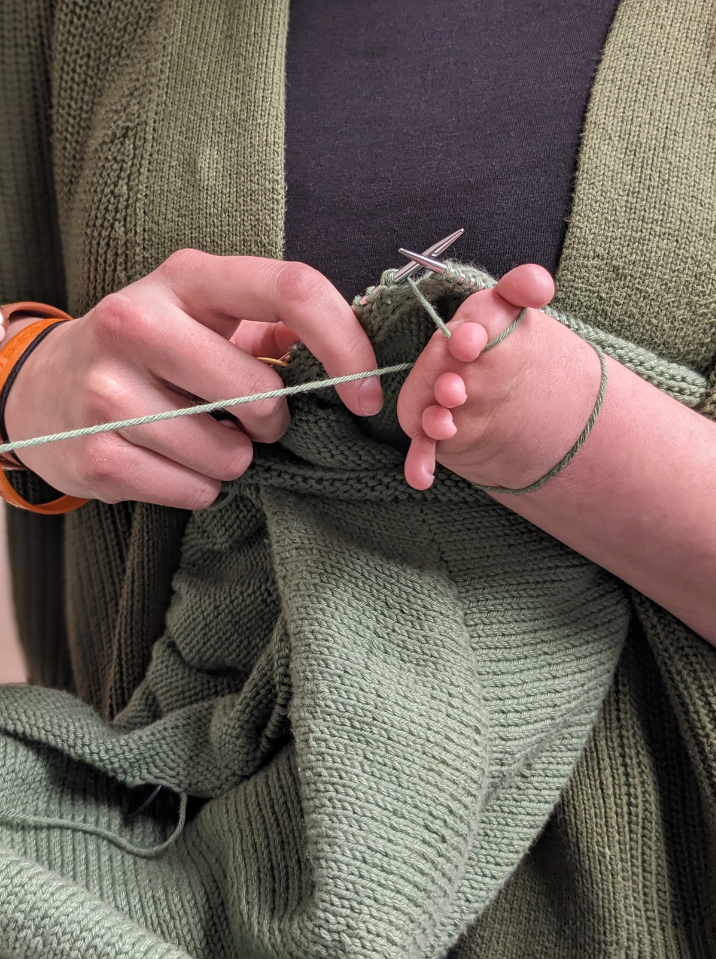
- Supporting crafts like crocheting, knitting, or sewing
Not every finger nubbin is functional. But many adults share that it’s not always obvious what will be useful until a person grows into their body. Once nubbins are gone, the option to use them in a creative way goes away.
And, equally importantly, many adults share that they like their nubbins. They may find them cute, or they may remind them that everyone is born different. Or, as for the adult quoted above, they may just feel like part of the body.
A developmentally respectful approach
Rather than framing this as a “right vs. wrong” decision, it may be more helpful to think in terms of timing and choice. When a nubbin is not medically dangerous, painful, or often injured, families may consider:
- Leaving it in place during early childhood
- Observing how (or if) the child uses it over time
- Revisiting the decision when the child is old enough to participate
These options may be preferable because function, creativity, and body awareness can evolve with age and some decisions benefit from patience.
A child who grows up with the ability to make choices about their body learns something powerful: my body is mine and my experiences matter.
Addressing issues of appearance
It’s also important to name the unspoken part of this conversation. Sometimes finger nubbins are removed because they don’t look “typical.”
For families raising a child with a limb difference, acceptance of physical differences is a process that evolves over time. There are emotional layers, and unlearning the idea that difference needs fixing may unfold over years.
Accepting a limb difference may also mean accepting the small, unexpected features that come with it. This may not be easy, and families deserve support, not judgment, as they navigate those feelings.
When finger nubbins become a health or sensory issue
Some families share a different experience, one that deserves equal consideration.
Infants and toddlers have strong oral motor needs and often explore their bodies with their mouths. In some children, this can mean chewing or biting on finger nubbins, leading to irritation, redness, or even bleeding. For families navigating repeated injury, infection risk, or difficulty keeping the area protected, this can become a genuine health concern, not a cosmetic one.
One potentially effective strategy is to cover the shortened arm or partial hand with a glove to reduce chewing.
If that doesn’t work and the child is at risk of or has sustained injury, choosing removal may be a thoughtful response to safety, comfort, and day-to-day well-being. This is an example of responsive decision-making in early development, rather than a failure to “wait it out.”
As with many aspects of raising a child with a limb difference, decisions around nubbins may be complicated. It’s important to explore why a choice is being made and recognize that different stages of development call for different considerations.
There is no single right answer
Some finger nubbins truly do cause problems and some families decide early removal is the best fit for their situation. In other families, the parents wait for their children to reach an age where they can choose for themselves. This is what happened for me, with my partial hand. When I reached my early twenties, I consulted with a hand surgeon, who removed a tiny nail that frequently caught on my clothing. It was my choice, and I asked no one’s permission. I have never regretted my decision.
Some things that can be helpful for decision-making are:
- Being informed by lived experience, not just appearance
- Involving the child when age appropriate (this will differ from one child to another)
- Revisiting the issue as the child grows
- Focusing on the child’s long-term relationship with their body
Every child is different, and every family makes decisions based on their own experiences and priorities. If you’re navigating questions about congenital upper limb differences, I invite you to explore the additional resources on this website for practical guidance and lived perspectives from the limb difference community.
Learn more
👉 Check out the Free Handouts
👉 What Is Occupational Therapy?
👉 Parenting Series landing page
👉 Start Here: Resources for Families Raising Children with Upper Limb Differences
👉 Contact us for consultation services
© 2026. Laura Faye Clubok, MS, OTR/L, On The Other Hand Therapy. All rights reserved.